Hospitality

Piedmont Area Resorts

Clean mountain air, healing springs, and three famous resorts that drew travelers from across the country.

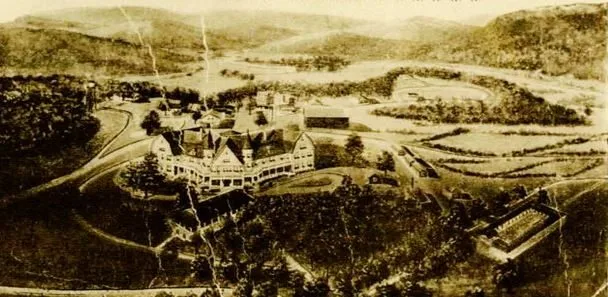
A bird's-eye view of the Borden-Wheeler resort in its mountain valley
A bird's-eye view of the Borden-Wheeler resort at Borden Springs, ringed by the Appalachian foothills.

Piedmont Springs

At a cost of $35,000 — about a million dollars today — the Piedmont Land & Improvement Company developed the Piedmont Springs Hotel in 1890: a luxurious three-story resort in the Appalachian foothills at 1,600 feet, four miles southeast of town. Thirty-six bedrooms with hot and cold water, cozy parlors, stone fireplaces, guest cottages, a dancing pavilion, and sulfur and chalybeate springs welcomed guests carried up from the trains by horse-drawn wagon, at rates from $2 a day to $40 a month. The resort burned in August 1960; its foundations remain as a testament to a slower pace of life.
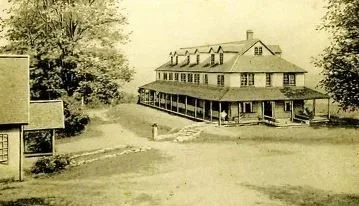
The Piedmont Springs Hotel with its long wraparound porch
The Piedmont Springs Hotel — thirty-six bedrooms in the foothills at 1,600 feet, four miles southeast of town.
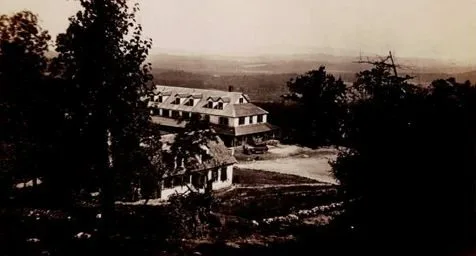
The hotel seen across the mountainside with its detached kitchen building
The hotel and its detached kitchen building on the mountainside.
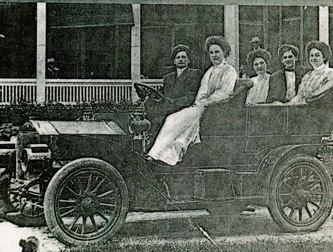
Five women seated in an early open automobile in front of a resort porch
Guests arriving by automobile — earlier visitors came up from the trains by horse-drawn wagon.
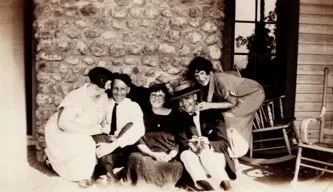
Five guests seated together in front of a stone fireplace on a porch
Guests gather at one of the resort's stone fireplaces.

Borden-Wheeler

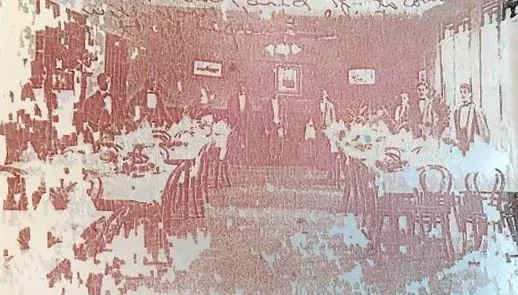
Around 1894, the Borden-Wheeler Company expanded a former land-company clubhouse into a three-story, 100-room hotel at Borden Springs with nine concert pianos, electricity, a large outdoor swimming pool, a dance pavilion, and a golf course — with butlers and servers in tuxedos tending guests who dined and danced to orchestras. The hotel, just off today's Chief Ladiga Trail about two miles east of Piedmont, was destroyed by fire in 1935.
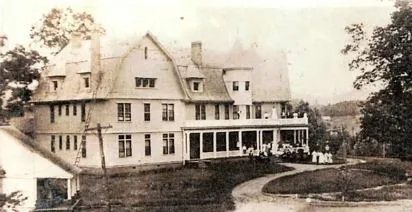
The gambrel-roofed Borden-Wheeler hotel across its lawn
The Borden-Wheeler hotel — 100 rooms, nine concert pianos, and orchestras in the evening.
Waiters standing ready between set tables in a resort dining room
Servers stand ready between the set tables of the dining room.

The Signal Hotel

In Bluffton — an iron-ore boomtown of Around 8,000 people in the late 1880s — the three-story Victorian Signal Hotel was among the finest in northern Alabama, with electric lights, elegant furnishings, and waters believed to have healing properties from natural lithium springs. Its guests included author Rudyard Kipling and retired Union General William T. Sherman. When the iron ore played out, so did Bluffton; the hotel stood into the 1950s.
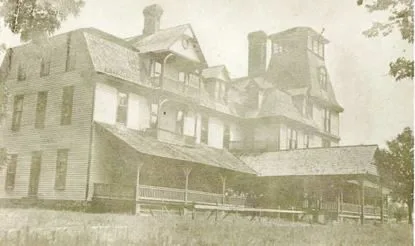
The three-story Victorian Signal Hotel with towers and porches
The Signal Hotel at Bluffton — hosting guests from Rudyard Kipling to General William T. Sherman.
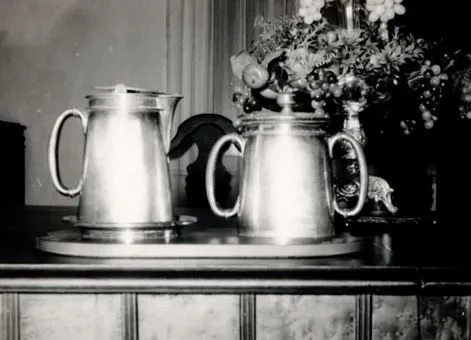
Two silver pitchers on a tray beside a floral arrangement
Silver service from the Signal Hotel, preserved in the museum's collection.
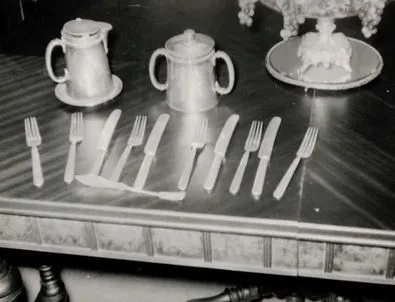
Silver forks and knives laid out on a polished table with serving pieces
The hotel's silver flatware, laid out as it once was for guests.

From the Society’s Files

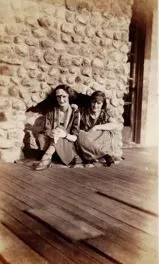
Two women seated on a porch floor against a stone fireplace
Two guests rest against a stone fireplace on the porch boards.

See the real artifacts. Hear the real stories.

Plan your visit