Frontier schools
Samuel McClellan was teaching a school in the area in the 1840s, according to The Story of Piedmont by Robert Haynes Savage, and an Alexander family taught school before 1850. The Cross Plains Academy (1851–1890) — with tuition of two to four dollars a month under Major Andrew D. Bailey — was the only school in the village in 1870, and the Cross Plains Institute (1871–1897) followed on Barlow Hill under Professor James H. Stark.
In 1870, the Selma, Rome & Dalton Railroad established a Freedmen's School at Patona to educate freed people working at the railroad service center, taught by William Luke of Talladega College. The school ended with the July 1870 Klan killings of Luke and four Black men — a tragedy that shaped the community's story and is documented in the society's research.
The Goshen Valley School was “blown to atoms” by a cyclone on February 19, 1884 — and remarkably, all 26 people inside survived with only bruises.
The Frances E. Willard schools
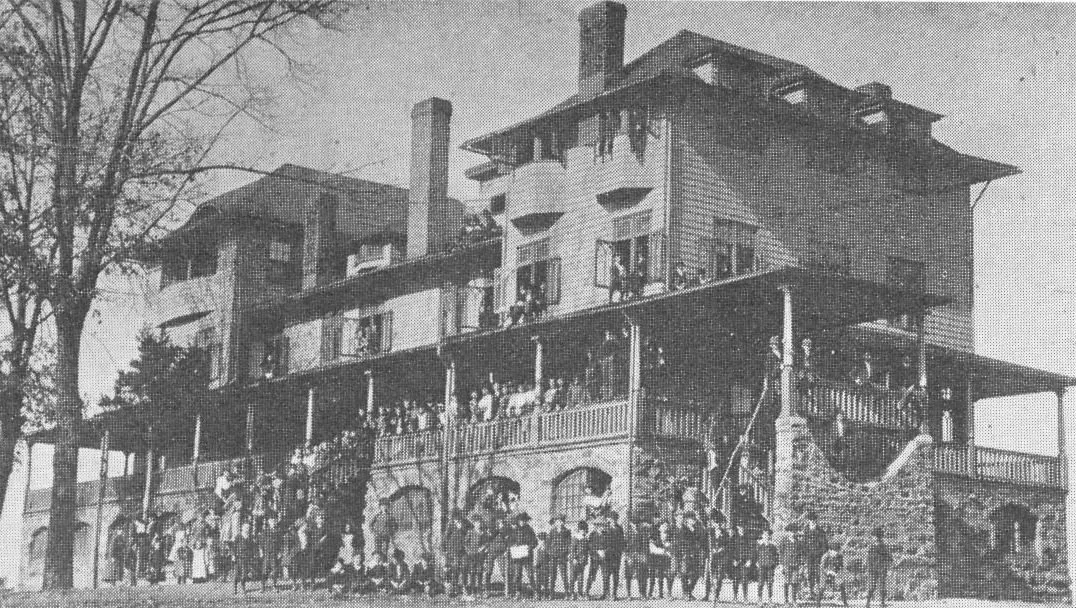
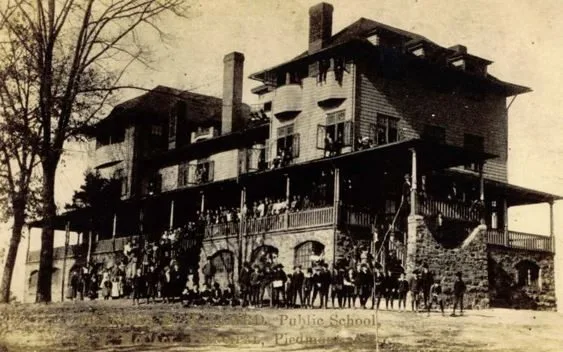
Mrs. Margaret M. Barber of Philadelphia bought the majestic Calhoun Hotel around 1894 and donated it to the City of Piedmont in 1899 for a public school — with three stipulations: that it be used as an institution of learning, that it be named for her friend Frances E. Willard, the educator and temperance leader, and that students have devotion each day. The Frances E. Willard School graduated its first class in 1902: two girls, Annie Laurie Yateman and Ida Moody.
The Piedmont City School System itself was created on December 11, 1900 by Act #139 of the Alabama General Assembly. When fire destroyed the Willard school and its records in 1916, local churches served as classrooms for over 200 children until a new brick school opened in 1918. Through the Great Depression, Mayor George Haslam and the city council borrowed $62,500 to build the 1930 Piedmont High School — later expanded with WPA-built classrooms, a cafeteria, and a band room — which today houses Piedmont Middle School.
African American education in Piedmont
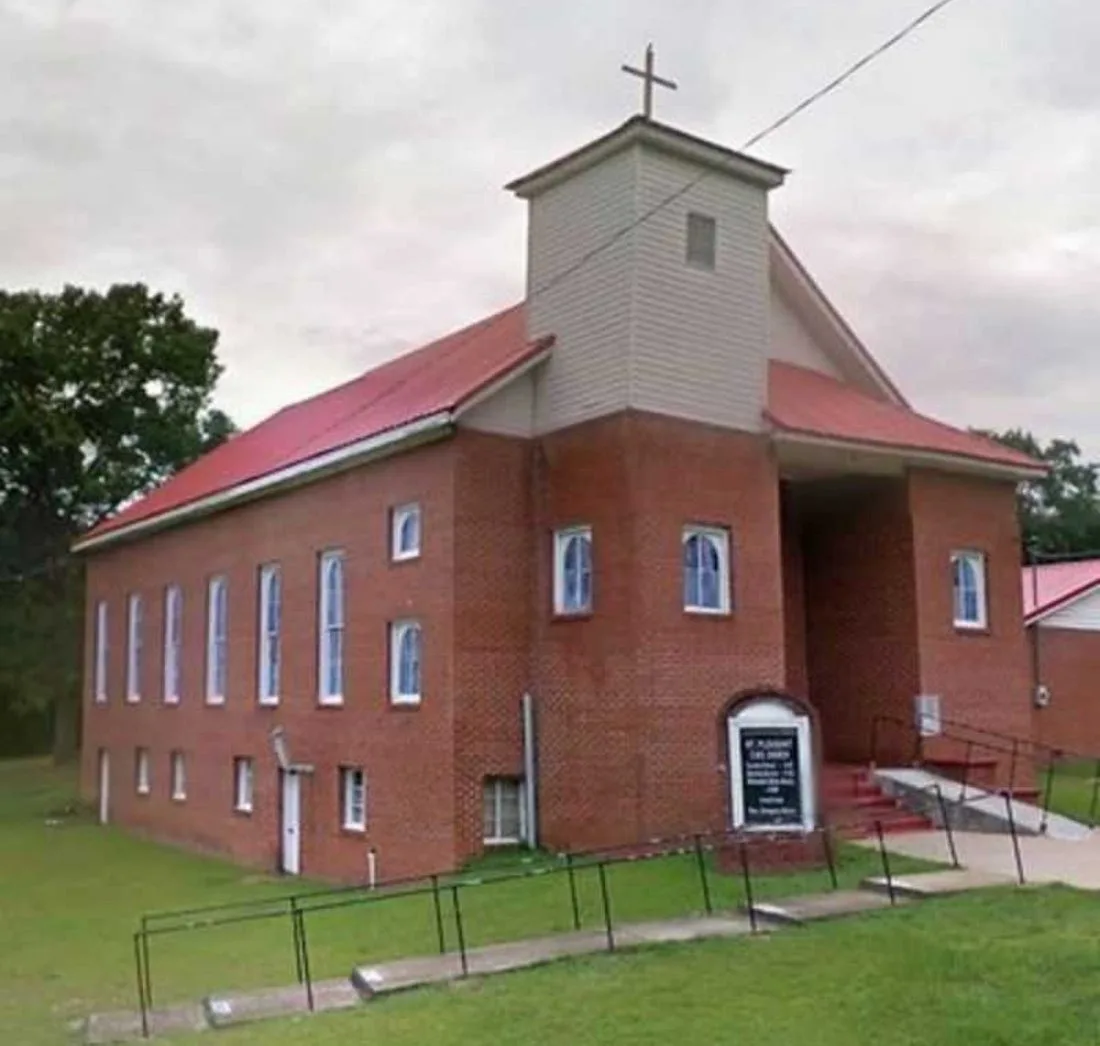
African American education in the area dates to the early 1910s, when the one-room Cherry Grove Schoolhouse was built south of Piedmont. In the city, a school honoring pioneering educator Mary McLeod Bethune began meeting at the C.M.E. Church on Lea Street around 1921. A block classroom building opened on U.S. Hwy 278 in 1950 under Principal J.W. Gregg, and the Bethune Gym followed in 1963, serving about 200 Black students in all twelve grades. The Bethune High School Eagles were coached by Jimmy Dew, a Piedmont native who played professional basketball with the Harlem Globetrotters and the Detroit Pistons.
Mr. Garland McClellan was Bethune's principal during the 1969–70 integration of Bethune students into the Piedmont City School System, and became principal of Frances E. Willard Junior High School. The Bethune building serves today as the Bethune Head Start and Community Center.
A modern system
Piedmont students have always pitched in: during World War II they bought savings stamps and piled scrap metal at the flagpole toward a P-51 Mustang for the Army, and in 1964 donated spare change to help save the USS Alabama. The modern era brought the 1982 Piedmont High School campus, the Field of Champions stadium, and the 2010 mPower technology initiative that put a laptop in the hands of every student in grades 4–12 — helping make Piedmont City Schools a nationally recognized system with over 1,130 students. Go Dogs!