Our Town

How Piedmont Got Its Name

Before December 12, 1888, this place answered to many names — each one a chapter in the town's story.

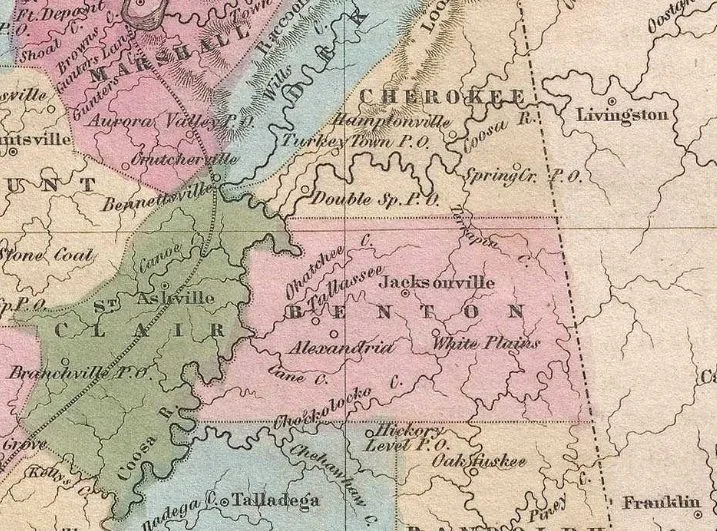
A hand-colored 1846 map showing Benton County, Alabama
Benton County on an 1846 map of Alabama. The county was renamed Calhoun in 1858 — and this crossroads within it would answer to five different names.

Ladiga

The earliest name in the area honors Chief Ladiga (Ledagie), a Muscogee (Creek) leader who owned land here after the Treaty of Cusseta in 1832. Ladiga, a community on the banks of Terrapin Creek about 2.5 miles northeast of present-day Piedmont, received a post office on March 23, 1837. In October 1864, Ladiga was the site of a cavalry skirmish in which Confederate soldiers under Brigadier General Samuel W. Ferguson turned back Union troops commanded by Brigadier General Hugh Judson Kilpatrick.

Hollow Stump Cross Roads

In the 1840s, a hollow sycamore stump with a wooden box inside served as the “post office” at the crossroads of two stagecoach roads — the Rome & Wetumpka Road (today's Ladiga Street) and the Centre & Choccolocco Road (Center Avenue) — for white settlers and American Indians alike. Neighbors left letters in the stump for travelers to carry along the way. A life-sized replica of the hollow stump stands in the museum today.

A life-sized replica of a hollow sycamore stump with a carved rabbit and a wagon wheel
The museum's life-sized hollow stump replica — in the 1840s, mail waited in a wooden box inside a sycamore stump like this one.

Cross Plains

The small community chose the name Cross Plains — noting the cross roads that intersect the Coosa Valley plains — over Griffin's Creek in 1851. The Cross Plains Post Office was established that September with Major Jacob Forney Dailey as the first postmaster, and the town was incorporated in 1871 and again in 1882. By 1879, Cross Plains counted about 200 citizens, eight general stores, a drugstore, two churches, two schools, and the Selma, Rome & Dalton Railroad.
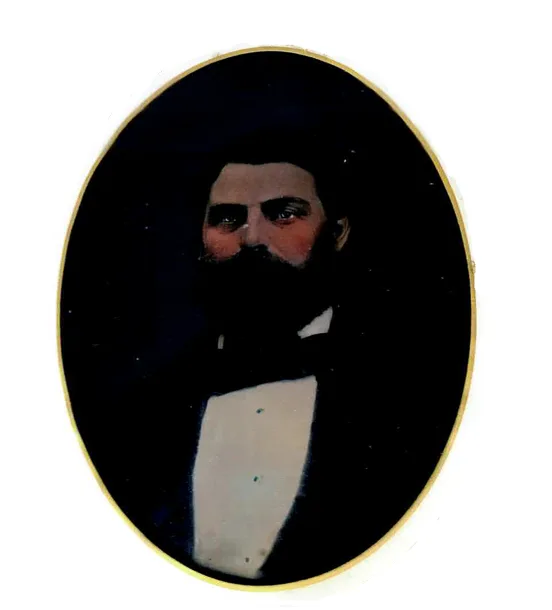
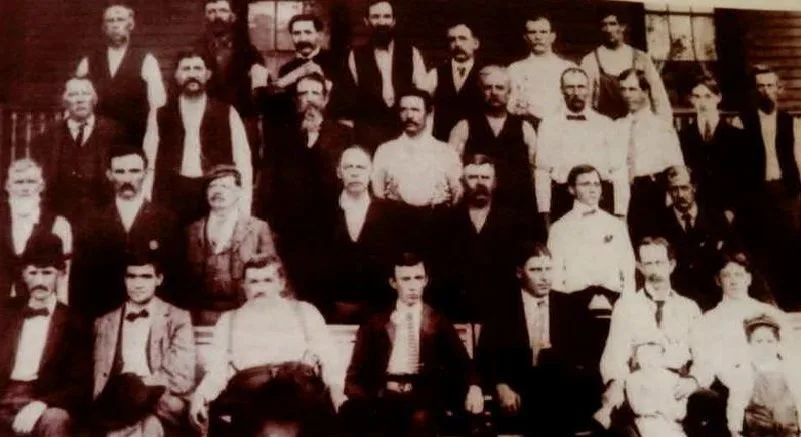
An oval portrait of Major Jacob Forney Dailey in formal dress
Major Jacob Forney Dailey — Cross Plains' first postmaster in 1851, and the first name on the town's mayors' marker, 1871–1874.
A large group of men in vests and ties posed on the steps of a porch
The men of Cross Plains, photographed on a downtown porch in the town's early years.
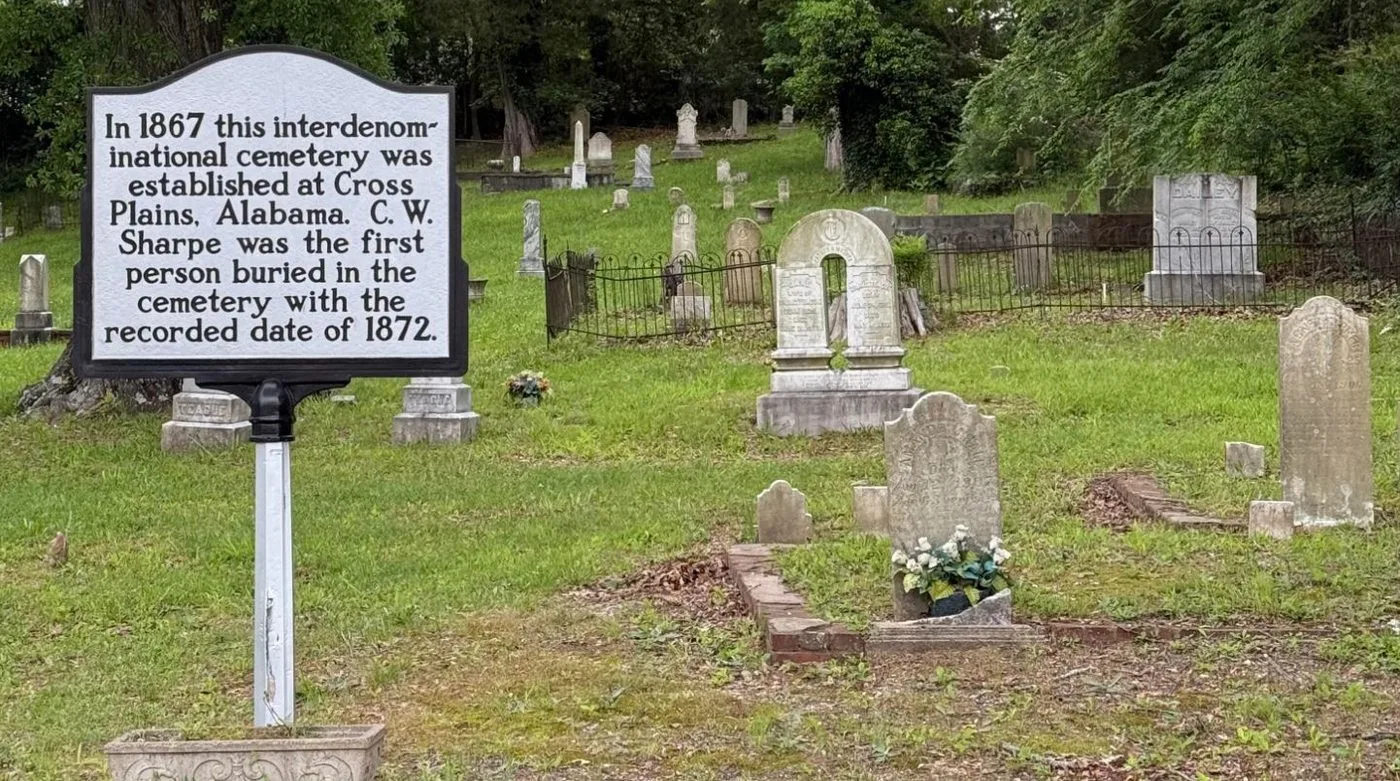
A historic marker in front of weathered headstones at Cross Plains Cemetery
Cross Plains Cemetery, established 1867. C.W. Sharpe was the first person buried here with a recorded date, 1872.
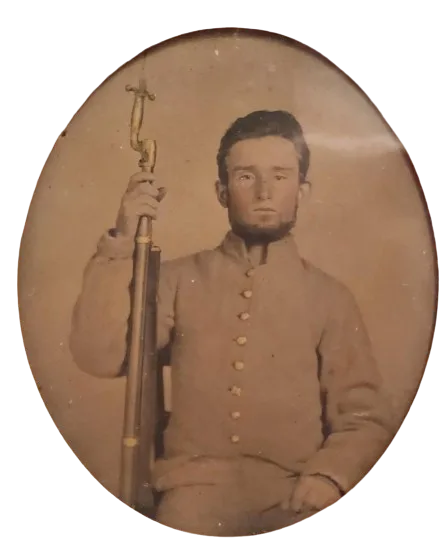
A tinted portrait of John Craig, a young soldier in uniform holding a rifle
John Craig, photographed in uniform. Portraits like this one hang in the museum's Cross Plains Room.

Patona

For about a month in 1870, the official post office moved to Patona, a 100-acre area west of Cross Plains that the Selma, Rome & Dalton Railroad Company was developing as a future town and railroad facility, named for company director William Paton.

Patona also holds one of the community's most sobering chapters. William Luke, a teacher from Canada and an instructor for Talladega College, was hired by the railroad to run a Freedmen's School educating formerly enslaved workers at the Patona railroad service center. In July 1870, Luke and four Black men were killed by a Ku Klux Klan mob in Cross Plains — a tragedy the society documents so it is never forgotten.
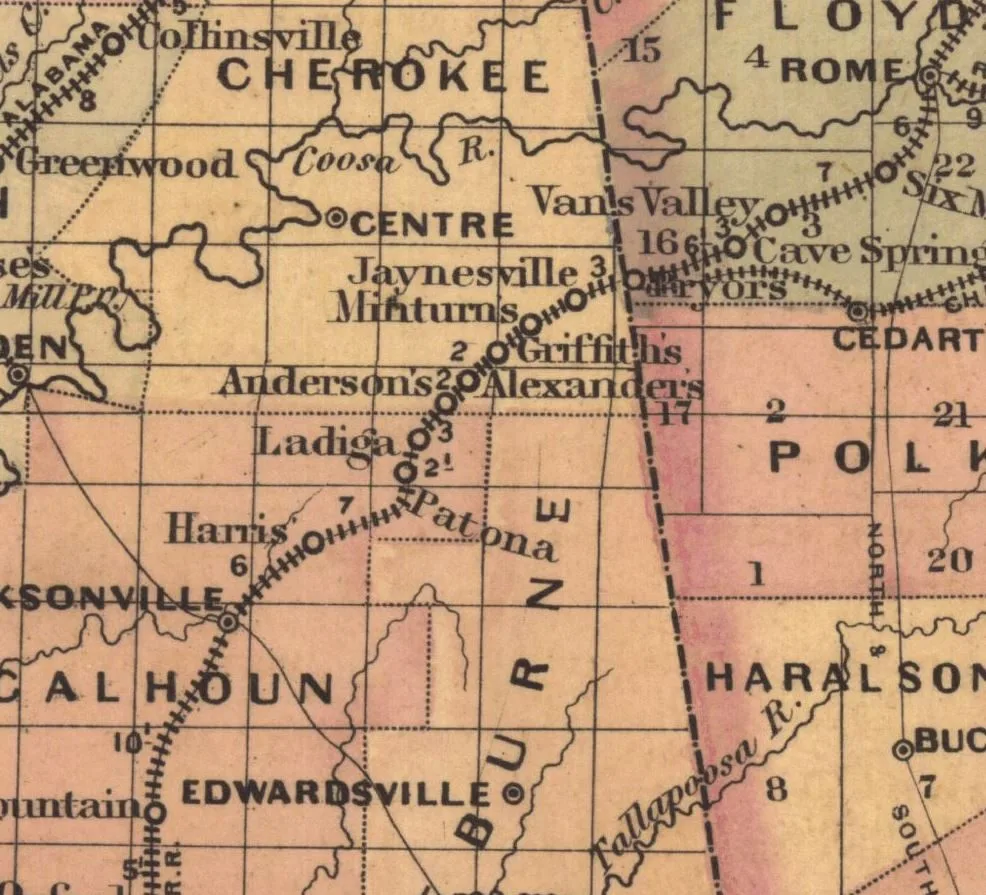
A colored 1870s county map showing Patona and Ladiga on the rail line
Patona and Ladiga on an 1870s map — small stations strung along the new railroad through Calhoun County.
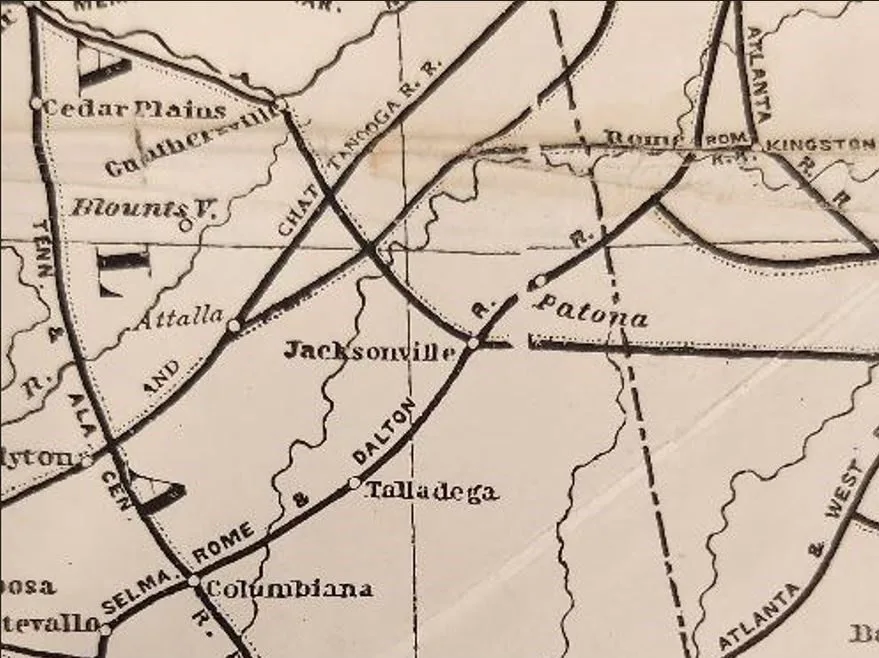
An early railroad map showing Patona east of Jacksonville
Patona on an early railroad map, at the end of the line east of Jacksonville — the railroad's planned town that lasted barely a season.

Piedmont

In 1888, the citizens of Cross Plains began the process of changing the town's name. William Iredell Hood is credited with proposing “Piedmont” — Latin for “foot of the hills” — because the area reminded him of the Piedmont Plateau of North Carolina. The Saturday Post championed the change, and on October 1, 1888, Cross Plains became Piedmont; the paper itself became The Piedmont Post that November.

Piedmont was officially incorporated by Act #192 of the Alabama General Assembly on December 12, 1888. The city's original limits were described as a one-half mile radius from the public well at East Ladiga Street and Center Avenue — which is why the well remains the symbolic center of town, and a centerpiece of the museum.
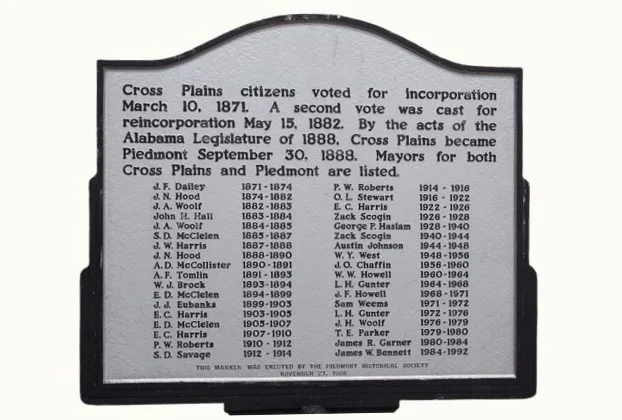
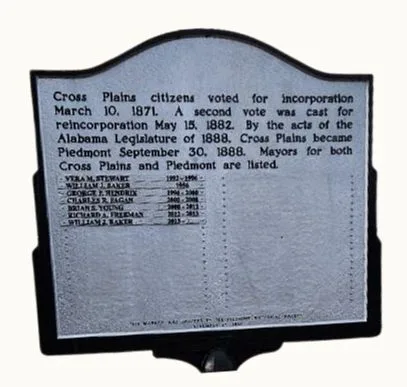
A cast marker listing the mayors of Cross Plains and Piedmont from 1871 forward
The Historical Society's marker records the incorporation votes of 1871 and 1882, the name change of September 30, 1888, and every mayor from J.F. Dailey forward.
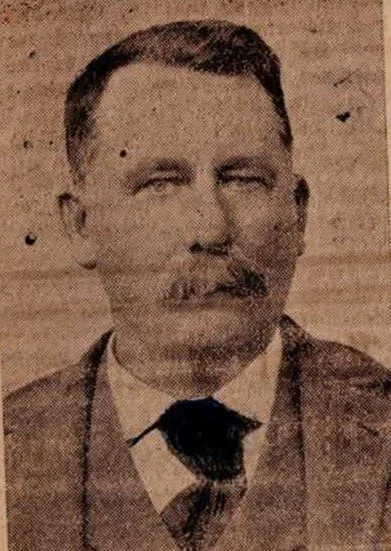
A newspaper portrait of Joseph Nathaniel Hood with a mustache and suit
Joseph Nathaniel Hood — “J.N. Hood” on the marker — served as mayor in 1874–1882 and again in 1888–1890, the years Cross Plains became Piedmont.
The second panel of the mayors marker, carrying the list into the 2010s
The marker's second panel carries the roll of mayors into the 2010s.

From the Society’s Files

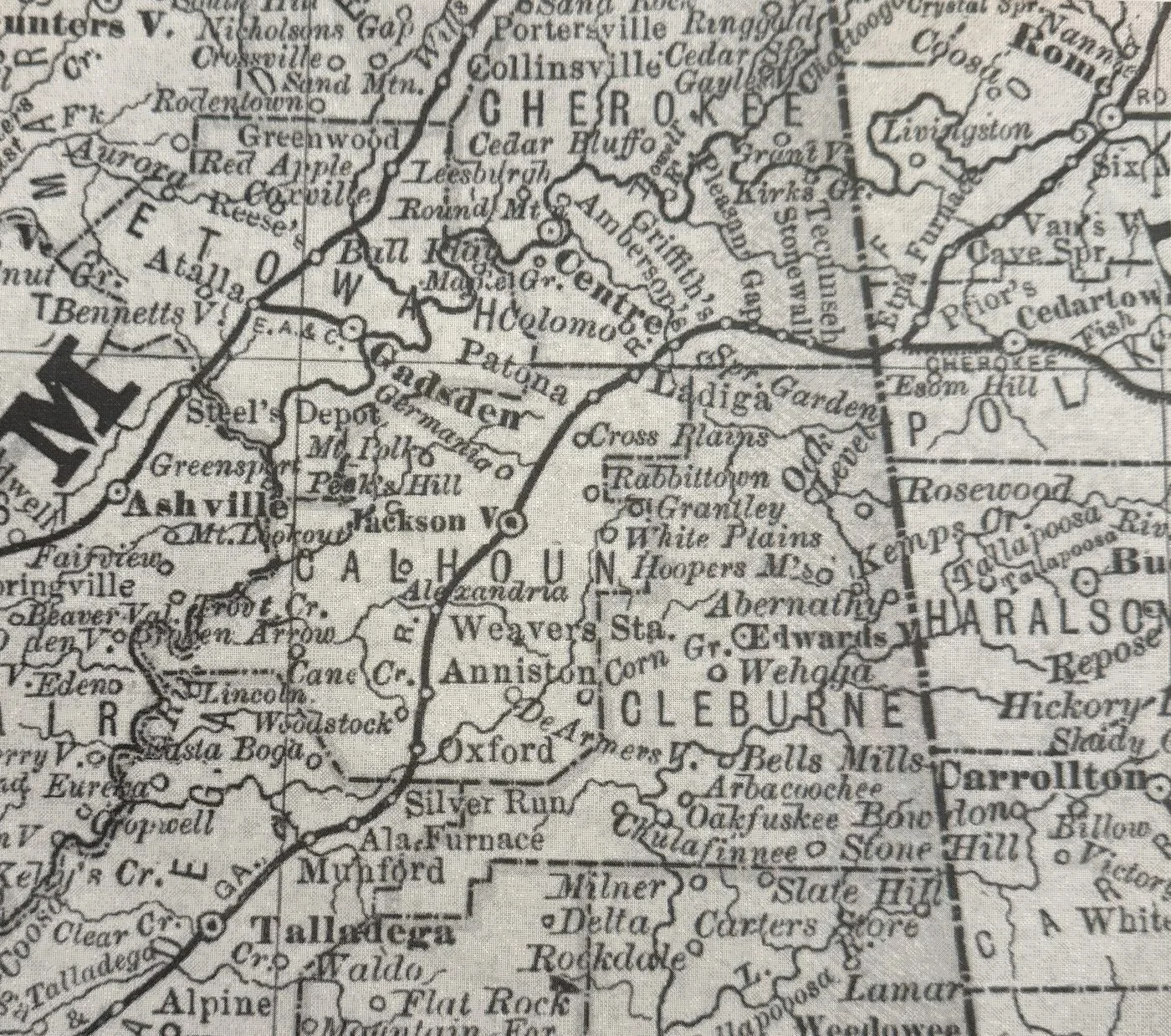
A detailed black-and-white map showing Cross Plains, Patona, and Ladiga
Cross Plains, Patona, and Ladiga together on a period map of Calhoun County — three of the town's five names, all within a few miles.
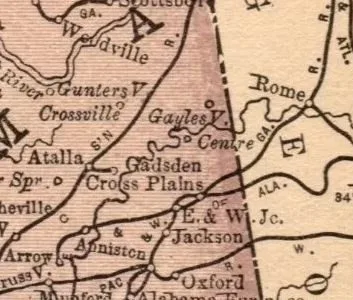
A pink-toned railroad map showing Cross Plains between Atalla and Jacksonville
Cross Plains on a late-1800s railroad map, on the line between Gadsden and Jacksonville.
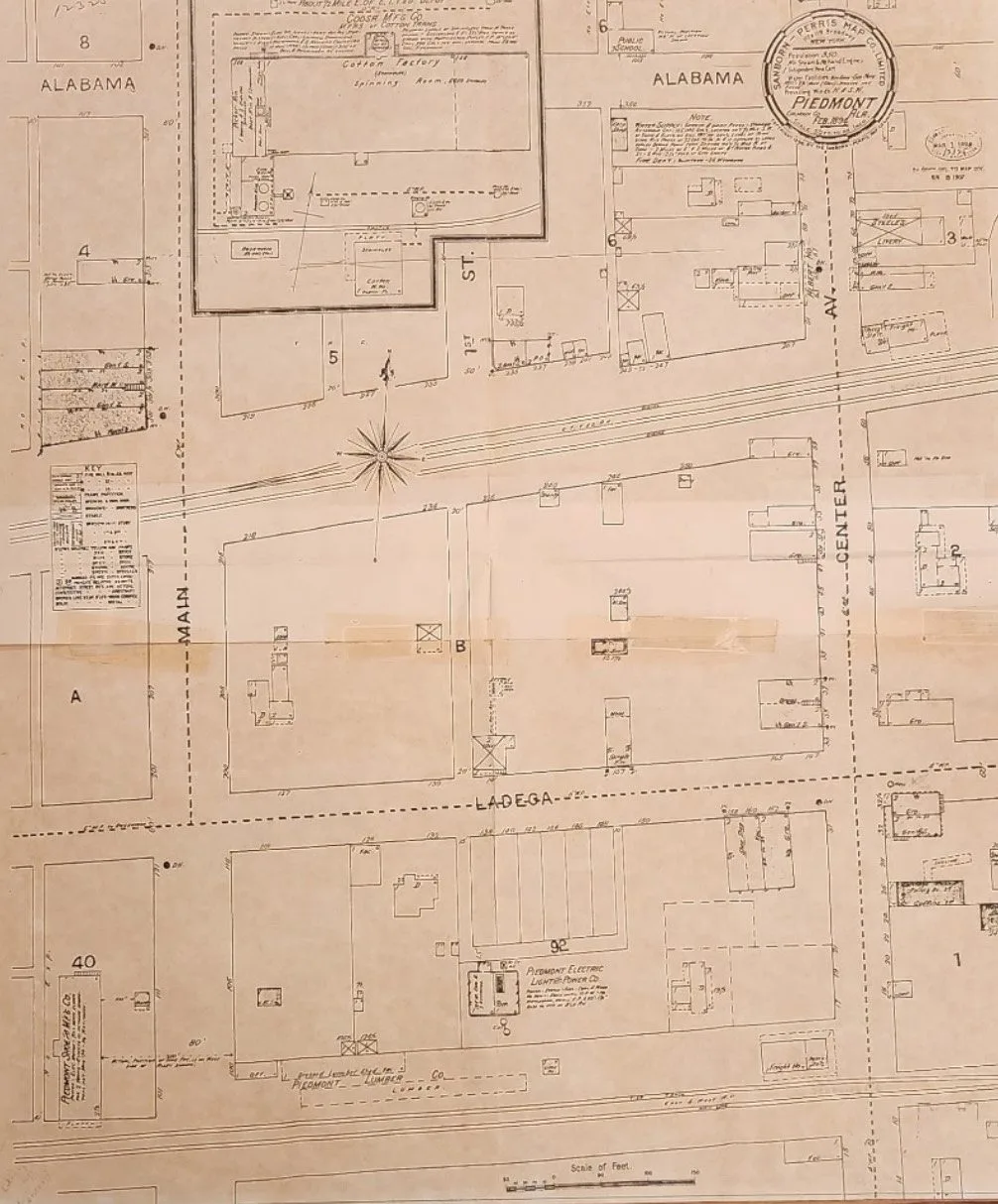
A Sanborn-Perris fire insurance map of downtown Piedmont dated 1894
A Sanborn-Perris fire-insurance map of downtown Piedmont, 1894 — Main, Center, and Ladiga Streets just six years after the name change.

See the real artifacts. Hear the real stories.

Plan your visit