The Selma, Rome & Dalton
The Alabama Tennessee River Railroad was chartered by the Alabama General Assembly in 1837. Construction began at Selma in 1851 and reached Blue Mountain by 1861, when the Civil War halted the work. In 1866 the General Assembly approved consolidating three railroad corporations into the Selma, Rome & Dalton Company, tasked with completing the line from Blue Mountain to Dalton, Georgia.
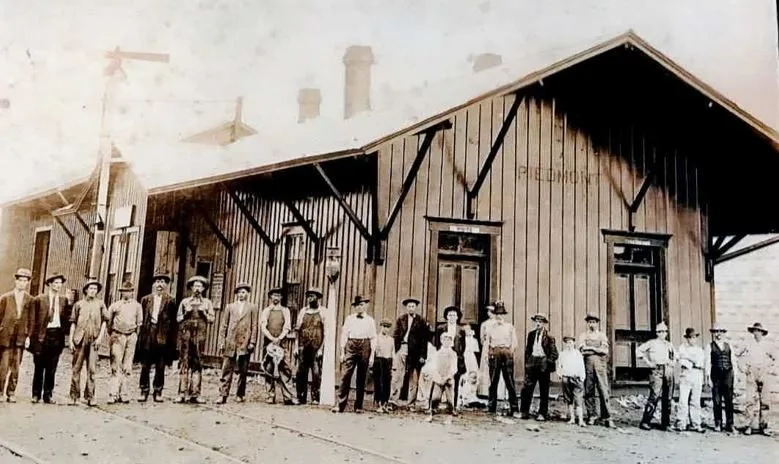
On Saturday, June 20, 1868, the first work train arrived in Cross Plains from Jacksonville at the brand-new depot — a wooden structure with Victorian architecture, gingerbread-trimmed exterior, and two red brick chimneys. Inside were four public rooms with three red brick fireplaces, plus a wooden freight and cargo room. With the railroad came carpenters, clerks, merchants, and families; stores opened, a post office followed, and Cross Plains became a place on the map.
The railroad carried cotton, grain, lumber, and livestock to distant markets — and brought back manufactured goods, newspapers, and ideas from the wider world. After bankruptcy in 1881, the line passed through successor companies into the Southern Railway in 1894, which merged into Norfolk Southern in 1982. For 121 years the depot served as a transportation hub, until the last train rolled south through Piedmont on March 1, 1989, carrying lumber from J.O. Bennett Lumber. John Edwin Decker was the last Piedmont depot agent.
The East & West Railroad and the Silver Comet
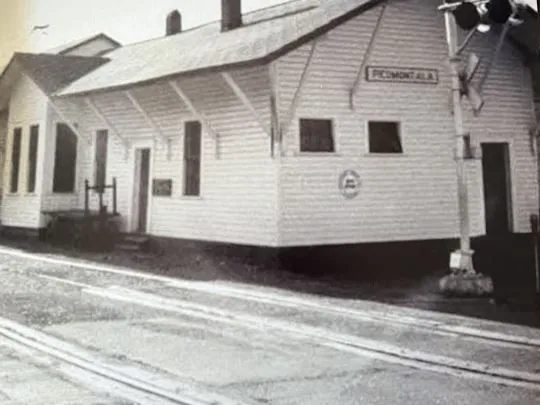
The East and West Railroad Company was incorporated in 1882 to build toward Birmingham and connect with lines from Cartersville and Cedartown, Georgia; it reached Cross Plains in 1883. Its long, narrow wooden depot stood along what is now the Chief Ladiga Trail.
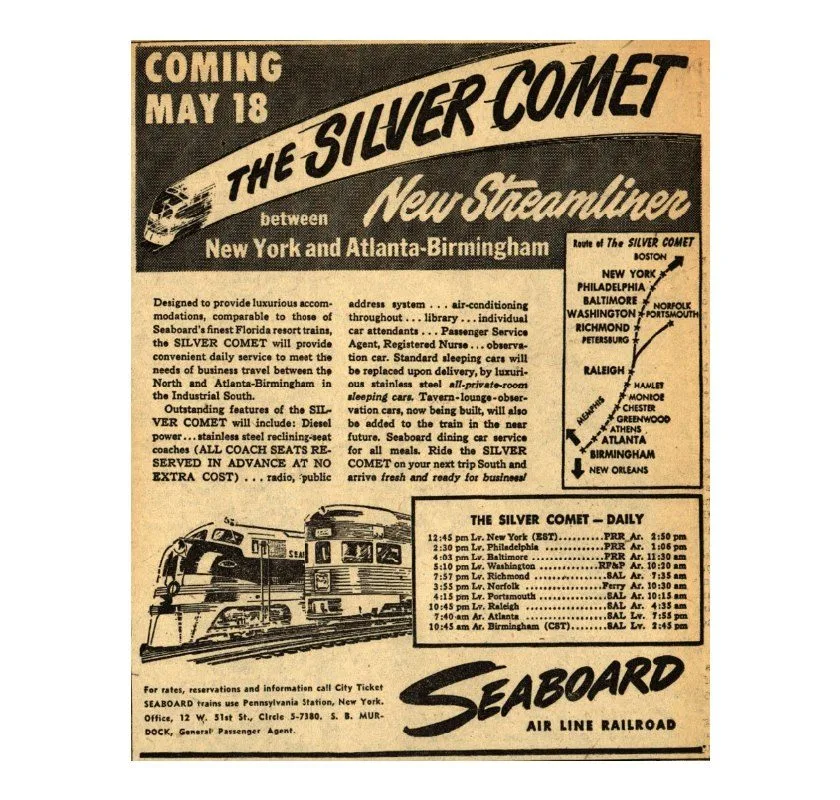
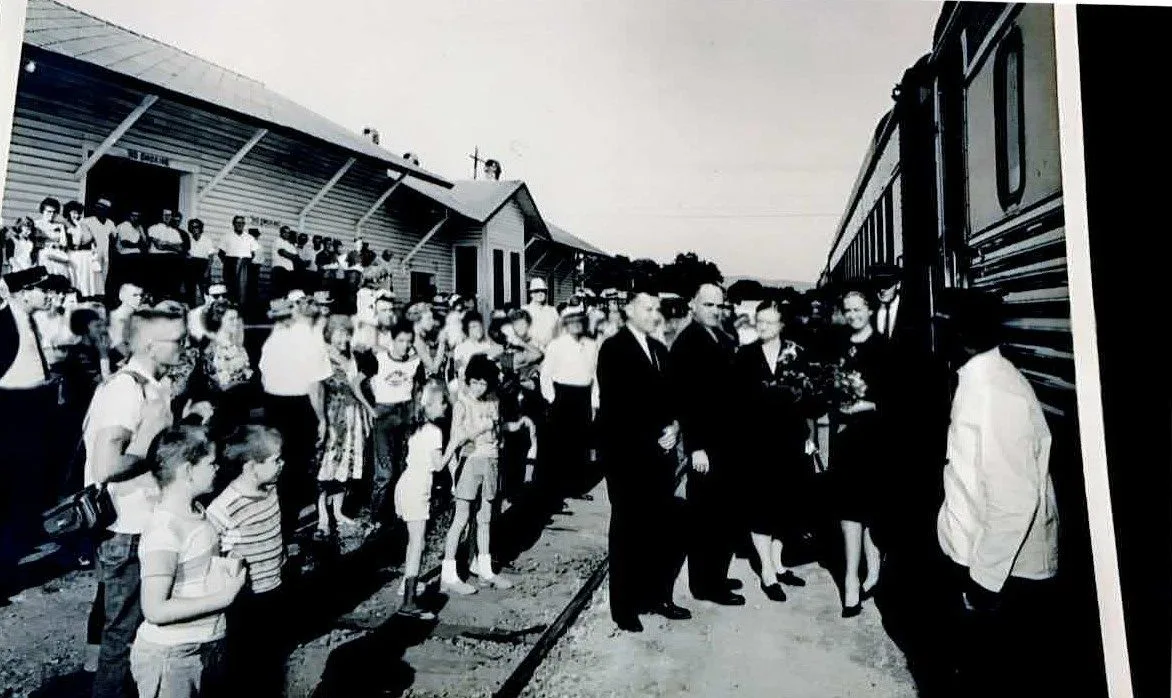
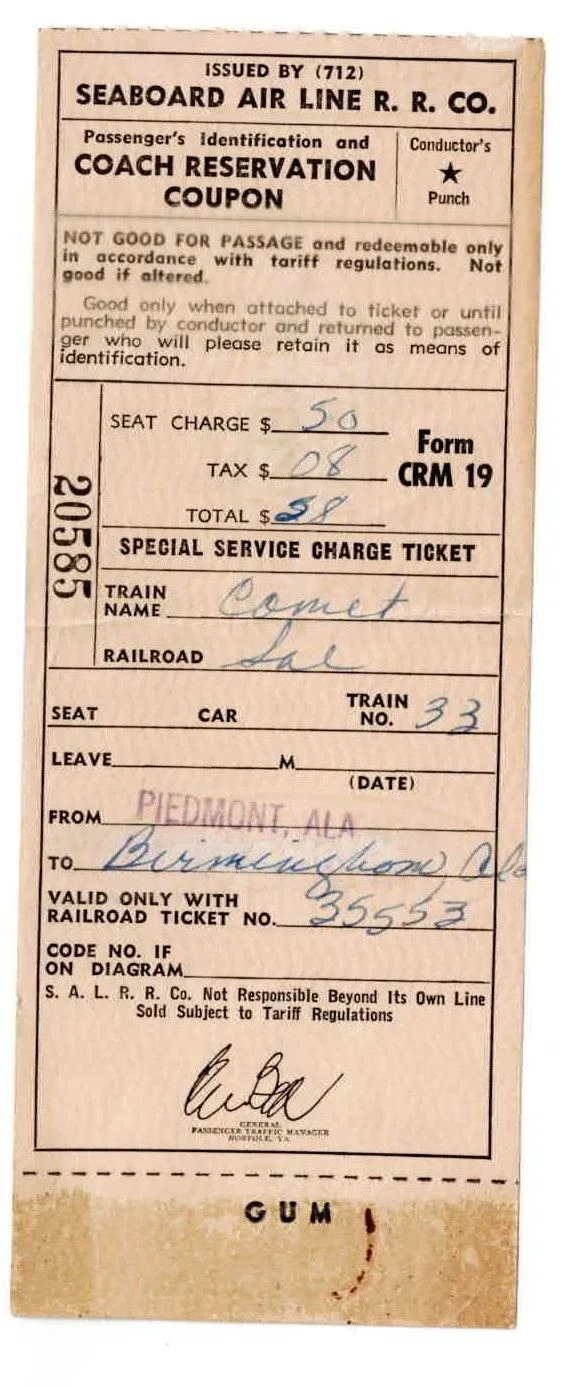
In 1904 the Seaboard Air Line Railroad acquired the East & West and completed the Atlanta-to-Birmingham track. That brought the Silver Comet — a deluxe passenger train from New York City to Birmingham — through Piedmont, with an inaugural stop on May 23, 1947 welcomed by the Piedmont High School band and city officials. The Silver Comet made its farewell stop on January 18, 1969.
After CSX ended train traffic in 1986 and removed the track, local governments developed the corridor into the Chief Ladiga Rails-to-Trails bike and walking trail, named in honor of Chief Ladiga of the Muscogee Creek Nation.
The depot today
Restored by the Piedmont Historical Society and the City of Piedmont, the 1868 depot now serves as the Southern Railroad Depot Museum — with a red-and-yellow caboose alongside, original railroad artifacts within, and the story of the town it built told in every room.